
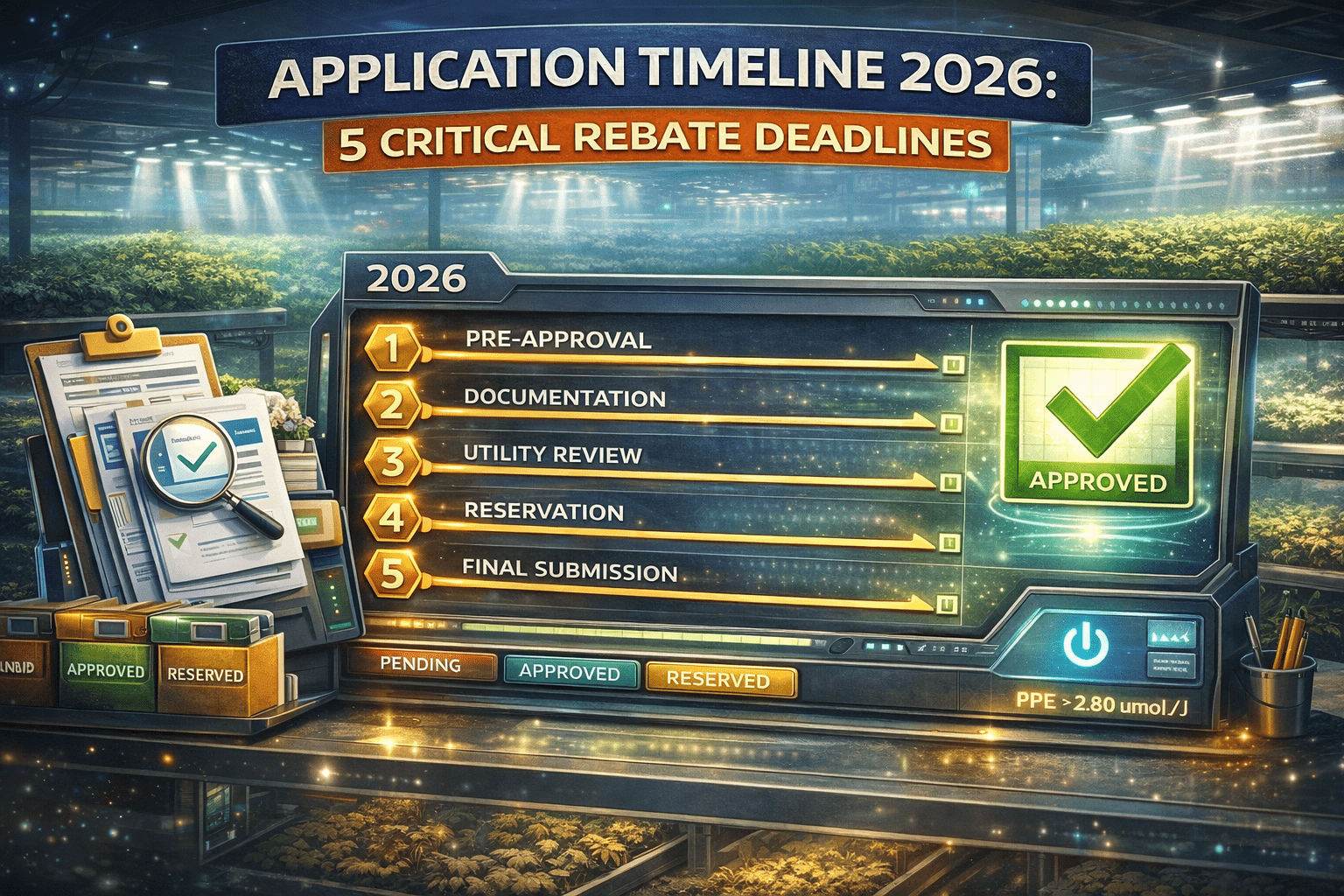
Application Timeline 2026 is becoming one of the most critical rebate factors for energy efficiency projects, especially as rebate programs tighten approval timelines and funding cycles become more competitive. Many projects technically qualify for rebates, but approval depends heavily on when and how submissions are made within the rebate timeline. In 2026, missing key rebate deadlines or submitting incomplete applications can result in delayed approvals or lost incentive opportunities, even for otherwise eligible projects.
Understanding how the rebate application timeline works, including utility review time, submission sequencing, and incentive reservation windows, is essential for securing rebates successfully. Projects that treat the application timeline as a strategic component rather than a simple administrative step consistently achieve faster approvals and better rebate outcomes.
Where Application Timeline 2026 Breaks Down in Rebate Projects
The most common issue in Application Timeline 2026 is not eligibility — it is execution. Many rebate projects encounter delays due to poor submission timing, incomplete documentation, and misunderstanding of how utility review processes actually function.
One of the primary bottlenecks is utility review time. As rebate demand increases, utilities are handling larger volumes of applications, which leads to longer review cycles. Projects submitted late in a funding period often experience slower processing times because they enter already congested queues. This makes rebate submission timing one of the most underestimated risk factors in the entire process.
Another major issue is inconsistent documentation. Rebate applications require alignment between fixture specifications, layout designs, and supporting calculations. When these elements do not match precisely, utilities often issue clarification requests. Each request introduces delays and extends the rebate approval process, sometimes pushing projects beyond available budget windows.
Specification clarity is also critical. If fixture performance metrics, especially efficiency-related values, are not clearly presented, reviewers may delay the application for further validation. This is particularly relevant in 2026, where rebate programs are increasingly focused on measurable performance rather than general qualification.
In addition, internal project coordination frequently causes delays. Engineering teams, procurement teams, and rebate coordinators often operate separately, leading to misaligned submissions. This results in errors, missing information, and repeated revisions, all of which extend the rebate timeline unnecessarily.
Ultimately, Application Timeline 2026 does not fail because of a single mistake. It fails because of compounded inefficiencies — late submission, unclear documentation, and slow response cycles — that collectively reduce the likelihood of timely rebate approval.
What Drives Rebate Approval Speed in Application Timeline 2026
To navigate Application Timeline 2026 effectively, it is essential to understand what utilities prioritize during rebate evaluation. Approval speed is no longer based solely on eligibility; it depends on how efficiently an application can be reviewed and verified.
Early submission is one of the most important drivers of rebate approval speed. Projects that enter the rebate pipeline earlier benefit from shorter queues and greater access to available funding. As incentive budgets are allocated on a rolling basis, early submissions significantly increase the chances of securing rebate incentives before funds are exhausted.
Structured and complete documentation is another critical factor. Utilities favor applications that are easy to review, with clear alignment between technical specifications, layout plans, and performance data. Well-prepared submissions reduce the need for follow-up questions and allow reviewers to process applications more efficiently.
Performance clarity also plays a key role. Rebate programs in 2026 are placing more emphasis on efficiency metrics and verifiable outcomes. Applications that clearly demonstrate compliance with program expectations are more likely to move quickly through the review process, while ambiguous submissions often experience delays.
Budget reservation timing is equally important. Many rebate programs operate within limited funding cycles, meaning that approval is partially dependent on when the application is submitted relative to available funds. Projects that delay submission risk entering the process after significant portions of the budget have already been allocated.
Facilities working with specialized commercial lighting solutions often streamline their rebate applications by aligning specifications early, while projects utilizing advanced under canopy lighting systems benefit from consistent layout design that reduces review complexity. Similarly, infrastructure strategies such as optimized rolling bench configurations help improve project readiness and ensure that rebate documentation reflects real-world installation conditions.
How to Secure Rebates Before Deadlines Shift
Securing rebates in Application Timeline 2026 requires more than meeting basic requirements — it requires proactive planning and strategic execution. Projects that consistently achieve successful outcomes follow a structured approach to submission and follow-up.
The first step is early preparation. This includes finalizing fixture specifications, confirming layout configurations, and organizing all required documentation before submission begins. Projects that prepare thoroughly at the outset reduce the likelihood of delays later in the rebate process.
Pre-approval strategy is another essential component. Submitting applications early in the rebate timeline increases the likelihood of securing incentive funding before budget allocations change. Waiting until later stages introduces unnecessary risk, especially in competitive rebate programs.
Staged submission strategies can also improve rebate approval outcomes. By submitting core documentation early and supplementing additional details as needed, projects can secure initial review placement and potentially reserve funding sooner. This approach minimizes the impact of documentation delays.
Active follow-up is often overlooked but highly effective. Projects that maintain communication with utility reviewers and respond quickly to information requests are more likely to progress efficiently through the rebate approval process. Passive submissions, by contrast, tend to remain in review queues for extended periods.
Finally, coordination across all stakeholders is critical. Aligning engineering, procurement, and rebate teams ensures that all aspects of the application are consistent and accurate. This reduces errors, improves review efficiency, and increases the likelihood of timely approval.
Application Timeline 2026 ultimately defines whether rebate opportunities are secured or missed. Projects that treat rebate timing as a strategic priority consistently outperform those that approach it as a secondary task. If your goal is to reduce delays, improve approval speed, and secure incentive funding with greater certainty, structured rebate planning and execution are essential — contact us for a static and swift result.